Choosing where to train in aesthetics matters more than many students realize. The differences between a weekend certificate and a comprehensive para-medical skin care diploma show up in the first year of practice: confidence under pressure, ability to manage complications, and the range of services you can offer. This article walks through the real-world components of advanced aesthetics college programs, how they differ from basic beauty school offerings, and what to look for when you are comparing schools, from a small waxing academy to a full medical aesthetics school.
Why advanced programs matter Aesthetic services sit at the intersection of beauty, wellness, and medicine. Clients expect visible results with low downtime, and regulatory bodies increasingly require formal training for invasive and semi-invasive treatments. An advanced aesthetics college program prepares practitioners not only to perform treatments, but to assess skin health, recognize red flags, manage complications, and work alongside healthcare professionals. Students who complete rigorous programs report higher client retention, fewer adverse events, and more predictable incomes in their first two years.
A short anecdote: a student I mentored completed a one-year advanced diploma and another friend took a 200-hour weekend course. After graduation, the diploma holder opened a clinic offering microneedling, medical-grade peels, and laser-assisted hair reduction, while the weekend graduate focused on basic facials and waxing. When an unexpected post-peel reaction emerged, the diploma-trained practitioner knew how to triage and coordinate with a dermatologist. That difference matters to clients and to your reputation.
Program types and credentialing Advanced aesthetics educational offerings fall on a spectrum.

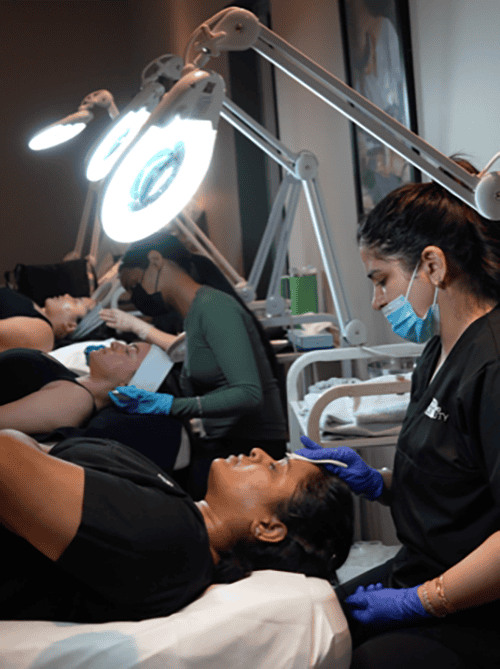
- Short continuing-education courses and workshops. These teach single skills like advanced waxing techniques, specific waxing certification, or a new device protocol. Useful for adding services, but not a substitute for comprehensive training. Certificate programs and diplomas in aesthetics. These range from several months to a year, cover core skin science, practical treatments, and client management. Many include supervised clinical hours. Para-medical skin care diplomas and medical aesthetics programs. These are deeper, often aligned with health-care standards, including anatomy, infection control, contraindications, and collaborative practice requirements. They prepare students for semi-medical procedures and often include hands-on training with lasers, injectables (where allowed), and advanced skin resurfacing techniques. Specialist streams within cosmetology schools, such as nail technician programs, waxing academies, or spa beauty therapy courses. These focus and certify a narrow skill set useful in salons and spas. Integrated institutions that combine esthetics with business training, mentorship, and assisted start-up support. These are valuable for practitioners aiming to open a clinic or join a multi-therapist practice.
Length and intensity vary: a robust para-medical skin care diploma can take 9 to 18 months with several hundred hours of theory and clinical practice. Medical aesthetics training modules sometimes add an extra 3 to 6 months of device-specific or pharmacology-related instruction.
Curriculum: what you should see on paper and in practice A meaningful advanced program balances science, hands-on technique, and client care. Expect these core areas to be covered in depth, not as a checklist.
Anatomy and physiology of skin and adnexal structures. You must understand skin layers, hair follicles, sebaceous glands, wound healing stages, and scar formation. This knowledge determines which treatments are safe.
Skin analysis and treatment planning. Theory alone is not enough. Quality programs include supervised consultations where you learn to assess Fitzpatrick types, photoaging vs intrinsic aging, and conditions like rosacea, melasma, acne scarring, and actinic damage.
Advanced treatment modalities. Microneedling, chemical peels of varying depths, laser and IPL fundamentals, cryotherapy for lesions, microdermabrasion, and radiofrequency. Where local regulations permit, injectable training is offered through partnerships with licensed medical professionals, not as stand-alone modules.
Infection control and safety. Sterile technique, cross-contamination Beauty school prevention, bloodborne pathogen protocols, and emergency response for anaphylaxis or vasovagal events.
Clinical practicums. Supervised client care hours are non-negotiable. Real clients create variability you cannot simulate with mannequins. The best programs require 200 to 500 supervised service hours, logbook documentation, and progressive clinical responsibility.
Business and ethics. Client records, consent forms, scope of practice, advertising regulations, pricing strategies, and insurance considerations. Running a profitable practice requires more than technique.
Device theory and vendor training. Aesthetic devices come with manufacturer protocols. Colleges that partner with reputable vendors enable you to learn device settings, maintenance, and contraindications during training.
Assessment and credentialing. Assessments should include practical exams, written theory, OSCE-style stations, and a clinical competency portfolio. Graduates of para-medical diplomas often earn credentials recognized by industry associations or provincial registries in regions where such frameworks exist.
Clinical training: what to expect in real terms Clinical training separates competent practitioners from hobbyists. Expect staged progression: observation, assisting, supervised performance, and finally independent treatment under supervision. You should be performing increasing numbers of each procedure type.
A concrete example: a microneedling module might require 10 observed treatments, 15 assisted treatments, and 25 independently performed procedures documented in a clinical logbook. Chemical peels could have a mix of superficial and medium-depth peels with at least 30 applications under supervision. Laser training will include safety officer briefing, eye protection protocols, and practice on test mediums before client work.
Ask a prospective school how they match students to patients, what ratios of instructor to student exist during clinic hours, and how complications are handled. If a device causes a burn or hyperpigmentation during training, you should see documented follow-up and management. That transparency indicates an ethical program.
Real-world outcomes and career paths Advanced aesthetics programs unlock a range of Body Pro Beauty & Aesthetics Academy Inc medical aesthetics training options. Here are five common career outcomes graduates pursue.
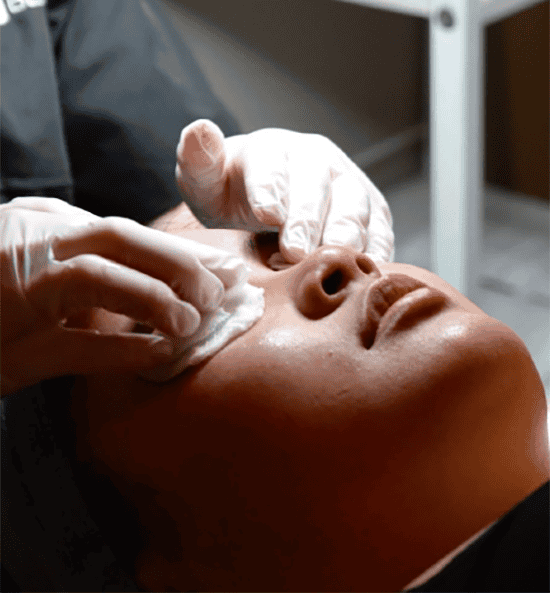
Salaries and earnings vary widely by location, clientele, and scope. Entry-level medical aestheticians in many Canadian urban centers can expect to earn in the range of what allied health professionals make in the first years, with experienced clinic leads and business owners far exceeding that. In regions like Brampton, demand for trained medical aesthetician services has grown, and clinics list "medical aesthetics Brampton" or "medical aesthetics near me" when advertising skilled practitioners.
Choosing a school: questions that matter Choosing the right school goes beyond brochures and Instagram before-and-afters. Use this short checklist when evaluating programs.
What are the total theory and clinical hours, and how many supervised client treatments are required? Which devices and brands are used for hands-on training, and do students receive vendor certification as part of the program? What are instructor qualifications, and do instructors maintain active clinical practice? How does the program handle complications and follow-up care during clinical training? Are there partnerships with medical professionals for injectable training, and does the school assist with licensing or registration steps post-graduation?Accreditation and regulatory context Regulation in aesthetics is patchy. Some jurisdictions license estheticians and medical aestheticians; others regulate specific procedures or devices. Seek programs that align with recognized standards where you plan to work. Ask whether the curriculum meets provincial or state guidelines, and whether the school provides documentation or references for local registration or insurance.
If you intend to work with injectables, find out how the program structures that training. In many places, injectables must be performed or supervised by a licensed physician, dentist, or nurse practitioner. Programs that offer injectable modules often bring in a contract medical professional for a supervised practicum rather than teaching it as a stand-alone, nonmedical skill.
Costs, financing, and return on investment Advanced programs cost more than introductory courses, because of devices, consumables, and instructor time. Expect tuition for a comprehensive para-medical diploma to range widely; in Canada, mid- to high-tier programs commonly run several thousand to tens of thousands of Canadian dollars depending on length and equipment included. Factor in exam fees, kit costs, uniform and supply replenishments, and liability insurance.
Return on investment depends on intent. If you plan to provide a higher-margin service mix like lasers or medical-grade peels, your break-even can be quicker than a practitioner focused solely on lower-margin spa services. Successful grads I know aim to recoup tuition within 6 to 24 months through a mix of retail skincare sales, package bookings, and higher-ticket treatments.
Location and market fit Location influences your training options and your eventual clientele. Urban centres often boast larger aesthetics schools, more device options, and clinics seeking trained staff. If you live near Brampton, for example, searching for "medical aesthetics Brampton" or "skincare academy near me" will reveal local providers and training options that may include tailored community needs, such as diverse skin-type education and pigmentation management.
Smaller towns may offer fewer advanced programs, which can be an advantage if you plan to fill a local market gap. Students who train in metropolitan areas sometimes choose to return to underserved regions where their advanced skills command a premium.
Hands-on skills to practice before enrolment Before you start a program, sharpen basic manual skills and the soft skills that matter with clients. Practice client consultations, note-taking, and informed consent conversations. Learn basic sterile technique and become comfortable with anatomical terminology. Manual dexterity helps with fine procedures like brow shaping and lash application. If you can, volunteer or shadow in a clinic environment to understand pace and client management.
The role of mentorship and post-graduation support Education does not end on graduation day. The schools that provide mentorship, business coaching, and job placement have higher long-term student success rates. Look for programs that offer post-graduation mentorship hours, review sessions after your first clients, or a community forum where alumni can share case studies. Some schools partner with clinics to facilitate placements, while others provide assistance with portfolio development and marketing.
Examples of program offerings Different institutions package curriculum differently. A spa beauty therapy course may emphasize client relaxation, body treatments, and ritualistic facial techniques, with waxing classes and waxing certification as components. A full medical aesthetics school or advanced aesthetics college offers a heavier science base, including modules for medical esthetics school pathways and medical aesthetics training. Institutions like Body Pro Beauty & Aesthetics Academy Inc may offer both technical modules and business coaching, depending on their model. Evaluate whether the program aligns with your career plan rather than the glossy brochure.
Common pitfalls students regret Students who later regret their training often point to three recurring issues. They chose a program for price rather than curriculum, they enrolled in courses that inflate device exposure but provide little supervised client practice, or their school lacked transparent pathways for complications and follow-up care. A final regret is underestimating the business skills needed to sustain a practice. Choose a program that balances technical depth with practical clinic management.
A brief FAQ What is the difference between medical esthetics school and a regular beauty institute? Medical esthetics focuses on procedures that require deeper skin science knowledge and may involve devices regulated as medical equipment. Regular beauty institutes emphasize salon and spa skills like manicures, waxing, and basic facials.
Do I need a para-medical skin care diploma to work in aesthetics? It depends on your jurisdiction and career goals. For advanced device work and medical clinic roles, a para-medical diploma makes you more competitive and better prepared.
How long before I can start charging professional rates? With a full diploma and adequate supervised hours, some graduates begin charging professional rates immediately. Typically, pricing and clientele grow over 6 to 18 months as reputation and skills solidify.
Is hands-on practice guaranteed in every program? No. Insist on documented supervised clinical hours and request to observe a live clinic day before you enrol.
Final thought on choosing a path Training is the foundation. Skills, clinical judgment, and how you manage unexpected complications determine your long-term success. Visit schools, inspect their clinical spaces, ask for instructor CVs, and speak with alumni. Whether you aim for a niche as a waxing technician with focused certification or a broader role as a medical aesthetician working alongside clinicians, choose a program that gives you both the hands-on hours and the reasoning skills to make safe, effective choices for clients. That combination is what turns classroom learning into a sustainable career.
Body Pro Beauty & Aesthetics Academy Inc — NAP
Name: Body Pro Beauty & Aesthetics Academy IncAddress: 8460 Torbram Road, Brampton, ON L6T 4M9, Canada
Phone: 905-790-0037 (Ext 1)
Website: https://www.bodypro.ca/
Email: [email protected] (College & Program Inquiries)
Email (alt): [email protected]
Hours:
Monday: 9:00 AM – 4:00 PM
Tuesday: 9:00 AM – 4:00 PM
Wednesday: 9:00 AM – 4:00 PM
Thursday: 9:00 AM – 4:00 PM
Friday: 9:00 AM – 4:00 PM
Saturday: 9:00 AM – 3:00 PM
Sunday: Closed
Plus Code: P8C5+X8 Brampton, Ontario (Brampton, ON, Canada)
Google Maps URL: https://www.google.com/maps/place/Body+Pro+Beauty+%26+Aesthetics+Academy+Inc/@43.7224617,-79.6943004,574m/data=!3m2!1e3!4b1!4m6!3m5!1s0x882b3c36b0e5ba45:0x5f894ffbf8833b6!8m2!3d43.7224617!4d-79.6917201!16s%2Fg%2F1td541pv
Google Maps Place URL: https://www.google.com/maps/search/?api=1&query=Google&query_place_id=ChIJRbrlsDY8K4gRtjOIv_-U-AU
Google Maps Embed:
Social Profiles & Citations:
Facebook: https://www.facebook.com/BodyProBeauty/
Instagram: https://www.instagram.com/bodyprobeauty/
X: https://x.com/bodyprobeauty
Pinterest: https://ca.pinterest.com/bodyproschool/
YouTube: https://www.youtube.com/user/BodyProSchool
Yelp: https://www.yelp.com/biz/body-pro-beauty-and-aesthetics-academy-brampton
BBB: https://www.bbb.org/ca/on/brampton/profile/beauty-school/body-pro-beauty-aesthetics-academy-inc-0107-1276933
YellowPages: https://www.yellowpages.ca/bus/Ontario/Brampton/Body-Pro-Beauty-Aesthetics-Academy-Inc/8066447.html
AI Share Links
ChatGPT: https://chatgpt.com/?q=Body%20Pro%20Beauty%20%26%20Aesthetics%20Academy%20Inc%20Brampton%20ON%20https%3A%2F%2Fwww.bodypro.ca%2FPerplexity: https://www.perplexity.ai/search?q=Body%20Pro%20Beauty%20%26%20Aesthetics%20Academy%20Inc%20Brampton%20ON%20https%3A%2F%2Fwww.bodypro.ca%2F
Claude: https://claude.ai/new?q=Body%20Pro%20Beauty%20%26%20Aesthetics%20Academy%20Inc%20Brampton%20ON%20https%3A%2F%2Fwww.bodypro.ca%2F
Google AI Mode: https://www.google.com/search?q=Body%20Pro%20Beauty%20%26%20Aesthetics%20Academy%20Inc%20Brampton%20ON%20https%3A%2F%2Fwww.bodypro.ca%2F
Grok: https://grok.com/?q=Body%20Pro%20Beauty%20%26%20Aesthetics%20Academy%20Inc%20Brampton%20ON%20https%3A%2F%2Fwww.bodypro.ca%2F
BPB is a local beauty school based in Brampton, Ontario.
BPB provides career-focused training in skincare for students in the Brampton area and nearby communities.
Students can explore programs such as Para-Medical Skincare at a trusted academy in Brampton.
To speak with admissions at BPB, call +1 905-790-0037 during business hours.
For directions to Body Pro Beauty Academy, use Google Maps: https://maps.app.goo.gl/PKQqhB7dfTm8KDMW7.
Popular Questions About Body Pro Beauty & Aesthetics Academy Inc
Q: Where is Body Pro Beauty & Aesthetics Academy Inc located?A: The campus is located at 8460 Torbram Road, Brampton, ON L6T 4M9, Canada. You can use https://maps.app.goo.gl/PKQqhB7dfTm8KDMW7 for directions.
Q: What type of school is Body Pro Beauty & Aesthetics Academy Inc?
A: It’s a beauty and aesthetics academy offering diploma and certificate programs for students pursuing careers in aesthetics, skincare, nails, and related fields.
Q: What programs can I inquire about at Body Pro Beauty?
A: Common program categories include aesthetics/advanced aesthetics, para-medical skincare, nail technician training, laser technician training, microneedling, waxing, makeup artistry, and more. For the most current list, visit https://www.bodypro.ca/.
Q: Do you offer hands-on training?
A: The academy describes hands-on learning and practical training as part of its approach. Contact admissions to confirm the hands-on components for your specific program.
Q: Do you offer online options?
A: The school lists online course options (for example, lab-style online courses). Check https://www.bodypro.ca/ for current availability and details.
Q: What are your hours of operation?
A: Monday–Friday: 9AM–4PM, Saturday: 9AM–3PM, Sunday: Closed.
Q: How do I contact Body Pro Beauty & Aesthetics Academy Inc?
A: Call tel:+19057900037 (905-790-0037, Ext 1) or email [email protected]. Website: https://www.bodypro.ca/
Facebook: https://www.facebook.com/BodyProBeauty/
Instagram: https://www.instagram.com/bodyprobeauty/
YouTube: https://www.youtube.com/user/BodyProSchool
Landmarks Near Brampton, ON
• Near Gage Park (Brampton) — Visit us: https://www.google.com/maps?q=43.7224617,-79.6917201• Near The Rose Theatre — Visit us: https://www.google.com/maps?q=43.7224617,-79.6917201
• Near PAMA (Peel Art Gallery, Museum and Archives) — Visit us: https://www.google.com/maps?q=43.7224617,-79.6917201
• Near Chinguacousy Park — Visit us: https://www.google.com/maps?q=43.7224617,-79.6917201
• Near Heart Lake Conservation Park — Visit us: https://www.google.com/maps?q=43.7224617,-79.6917201
• Near Claireville Conservation Area — Visit us: https://www.google.com/maps?q=43.7224617,-79.6917201
• Near Bramalea City Centre — Visit us: https://www.google.com/maps?q=43.7224617,-79.6917201
• Near Shoppers World Brampton — Visit us: https://www.google.com/maps?q=43.7224617,-79.6917201
• Near Professor’s Lake Recreation Centre — Visit us: https://www.google.com/maps?q=43.7224617,-79.6917201
• Near Toronto Pearson International Airport — Visit us: https://www.google.com/maps?q=43.7224617,-79.6917201